

+86-571-63780050
+86-18918137728
19941084290
Content
- 1 How Ultra White Laminated Glass Works: Low Iron Glass Plus a Clear Interlayer
- 2 Ultra White vs Standard Clear Laminated Glass: Data Comparison
- 3 Hidden Metrics in Low Iron Laminated Glass That Affect Real Projects
- 4 Applications of Ultra Clear Laminated Glass: Where Demand Comes From
- 5 How to Select Ultra White Laminated Glass: Step by Step Guide and ROI
- 6 Maintenance, Handling and Compliance for Laminated Glass Standards
- 7 Ultra White Laminated Glass FAQ
- 8 Summary: Getting the Most From Ultra White Laminated Glass
Ultra White Laminated Glass: Technical Data, Applications and Selection Guide for Project Buyers
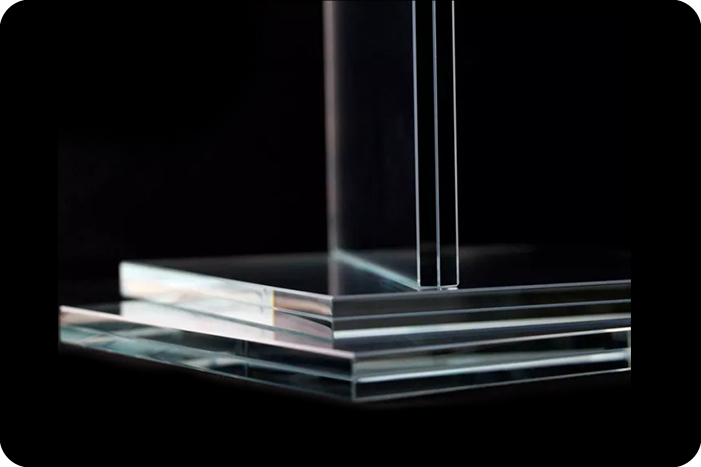
Ultra white laminated glass keeps roughly 4 to 5 percentage points more visible light than standard clear laminated glass of the same thickness, and it removes the green cast that shows along every cut edge. For a retail display, a frameless balustrade or a gallery partition, that difference is visible from across the room.
Specifiers usually ask for it after ordinary laminated glass has made a design look dull. A white wall seen through a 12.76 mm clear laminated panel turns slightly grey green. The same wall behind a low iron panel stays white. Edges tell the same story: on a glass shelf, a staircase or a showcase, the exposed edge is the first thing a visitor notices, and a deep green edge is the quickest sign that standard float glass was used.
This article is written for procurement managers, façade consultants, fabricators and distributors who need to decide whether the extra cost is justified and how to specify the product correctly. It covers the glass chemistry, side by side data, hidden performance metrics, the application mix, a selection workflow with a simple ROI model, compliance points and eight practical questions. Product details for specific builds are listed on the Hangzhou SCSG Glass Technology ultra white laminated glass product page.
Core Conclusions for Buyers
Clarity is the main return. A 6+6 mm build with a 0.76 mm PVB interlayer typically transmits 87 to 89 percent of visible light in ultra white form, against 83 to 85 percent in standard clear form.
Safety performance does not change. The low iron substrate and the interlayer work independently, so impact behavior, post breakage retention and sound reduction follow the same rules as any other laminated glass of equal build.
The price premium is moderate. Expect roughly 15 to 35 percent above standard clear laminated glass, depending on thickness, interlayer and market conditions.
Interlayer and edge treatment decide long term appearance. Low iron glass paired with a yellowing interlayer or an incompatible sealant wastes the investment.
How Ultra White Laminated Glass Works: Low Iron Glass Plus a Clear Interlayer
The product is a sandwich of two or more glass plies bonded by one or more polymer interlayers. What separates it from ordinary laminated glass is only the substrate, but that single change affects color, light transmission, edge appearance and the way the interlayer must be chosen.
Low iron glass substrate: why iron content controls color
Iron is a natural impurity in silica sand. Standard float glass contains roughly 0.10 percent iron oxide. Ferrous iron absorbs red and near infrared light, ferric iron absorbs ultraviolet and some blue light, and the balance between them leaves a green tint that grows with thickness. A single 6 mm pane hides it well enough. Two 10 mm plies plus an interlayer do not.
Ultra white glass, also sold as low iron or extra clear glass, starts from selected sand with very low iron content and a controlled oxidizing melt. The iron oxide level falls to about 0.01 percent or lower. A 6 mm monolithic pane then transmits around 91 to 92 percent of visible light, compared with about 88 to 89 percent for standard clear glass, and the green edge turns into a near colorless edge with only a faint blue white hint.
Interlayer options: PVB, SGP and optical quality
Polyvinyl butyral, known as PVB, is the standard interlayer. It is supplied in thicknesses such as 0.38, 0.76, 1.14 and 1.52 mm, and it blocks about 99 percent of ultraviolet radiation, which protects fabrics, flooring and merchandise behind the glass. Ionoplast interlayers, usually called SGP, are considerably stiffer and are chosen for structural balustrades, canopies and floors where the panel must carry load after one ply cracks.
For ultra white projects the interlayer itself must be optically clear. A standard PVB film can carry a slight yellow tone that is invisible next to green tinted glass but obvious next to low iron glass. Buyers should ask for an extra clear or low yellowness interlayer and confirm it in writing, because the film is the one component that can undo the benefit of the substrate.
Lamination process: where optical quality is won or lost
The plies are washed, dried and assembled with the interlayer in a controlled, low dust and low humidity room. Heated nip rollers press out most of the air and give the stack its first bond. The assembly then goes into an autoclave, commonly at around 130 to 140 degrees Celsius and 12 to 13 bar, where the remaining air dissolves into the film and the interlayer becomes optically clear. Dust, moisture or poor trimming at this stage appear later as bubbles, haze or edge delamination, and they are far more visible in ultra white glass because there is no tint to mask them.
Low Iron Clarity
Higher visible light transmittance and near neutral color rendering, so white stays white and products keep their true colors.
Safety Retention
If a ply breaks, the interlayer holds the fragments in place, which keeps the opening protected and reduces injury risk.
UV and Acoustic Benefits
About 99 percent of UV is filtered, and acoustic grade interlayers can add several decibels of sound reduction over monolithic glass of equal weight.
Showcase Quality Edges
Polished edges on low iron glass look clean and bright instead of green, which matters for exposed and frameless details.
Ultra White vs Standard Clear Laminated Glass: Data Comparison
The table below compares three common 12.76 mm builds (6 mm glass, 0.76 mm PVB, 6 mm glass). Values are typical ranges and should be confirmed against the supplier's test report for the exact glass and film combination.
Parameter
Standard Clear Laminated
Ultra White Laminated
Grey Tinted Laminated
Iron oxide in glass
About 0.10%
0.01% or lower
About 0.10% plus colorants
Visible light transmittance
83% to 85%
87% to 89%
40% to 55%
Edge appearance
Distinct green
Near colorless
Dark grey
Color rendering
Slight green shift
Close to neutral
Dimmed, neutral grey
UV blocked by interlayer
About 99%
About 99%
About 99%
Solar heat gain
Moderate
Slightly higher than clear
Lower
Typical price index
100
115 to 135
105 to 125
Best suited to
General safety glazing
Displays, premium balustrades, design glass
Privacy and glare control
Typical values for 6+6 mm builds with 0.76 mm PVB. Price index is relative, with standard clear laminated glass set to 100.
Reading the comparison correctly
Three rows deserve attention. First, the transmittance gap of about four points looks small on paper, yet the eye is very sensitive to it when two panels sit side by side or when a white or pale product is viewed through the glass. Second, the edge appearance row is the one clients notice immediately in samples. Third, the solar heat gain row is the one many buyers miss: because low iron glass absorbs less energy, more solar radiation passes through it, so a south facing façade may need a low emissivity or solar control coating to compensate.
The price index also needs context. The premium applies to the glass plies, not to the interlayer, hardware, installation or design work. In an assembly where the interlayer, edge work and tempering are a large share of cost, the percentage uplift on the finished panel is smaller than the uplift on raw low iron float glass.
Hidden Metrics in Low Iron Laminated Glass That Affect Real Projects
Datasheets lead with thickness and weight. Experienced buyers look further down the sheet, because the figures below decide whether a finished installation looks the way the rendering promised.
Typical Visible Light Transmittance by Laminated Build (%)
84
88
87
86
85
45
Clear 6+6
Ultra white 6+6
Ultra white 8+8
Ultra white 10+10
Ultra white 12+12
Grey 6+6
Indicative values with 0.76 mm PVB. Always confirm with the test report for the specific glass and interlayer supplied.
Thickness penalty is small in low iron glass
The chart shows a pattern that surprises many buyers. Going from 6+6 to 12+12 mm costs an ultra white build only about three points of transmittance, because the glass absorbs so little to begin with. A 12+12 mm ultra white panel for a heavy duty balustrade still transmits more light than a 6+6 mm standard clear panel. That matters when structural requirements push the design toward thick plies.
Edge color and yellowness index
Edge color is rarely quoted as a number, but it is the property clients judge first. Ask for a physical edge sample at the actual laminated thickness, polished the same way as the production panels. Where color accuracy is critical, request the yellowness index of the interlayer and the color coordinates of the finished laminate, and compare them against a reference sample approved by the designer.
Solar energy transmittance and glazing in sunny climates
Low iron glass transmits more of the solar spectrum, including near infrared. Interior glazing is unaffected. For exterior use, particularly on sun exposed façades or skylights, the energy side of the specification should be reviewed with the building services engineer, and a coated or insulated glass unit is often the right answer.
Haze, bubbles and long term interlayer stability
Haze and trapped micro bubbles are the two defects that low iron glass reveals most clearly. Ask the manufacturer about visual quality criteria for laminated panels, the inspection distance and lighting used, and the interlayer's resistance to edge discoloration. Panels with exposed edges in damp or wet locations need particular attention, a point returned to in the compliance section below.
Applications of Ultra Clear Laminated Glass: Where Demand Comes From
Demand for low iron laminated glass concentrates in places where people look at the glass, or through it, from close range. The chart below gives an indicative application mix for typical project enquiries. It is a directional estimate for planning, not an audited market statistic, and the real balance varies by region and by year.
Indicative
application
mix
application
mix
Frameless balustrades, stairs and railings
24%
Showcases, retail and museum display
20%
Façades, curtain walls and shopfronts
18%
Office and hotel interior partitions
16%
Furniture, tabletops and appliances
12%
Skylights, canopies and other uses
10%
Ultra clear laminated glass for balustrades and staircases
Balustrades lead the mix because they combine a load requirement with a visual one. Building codes require laminated, usually tempered laminated, glass at heights where a fall is possible. At the same time, designers want the barrier to disappear. Thick plies, often 10 mm or more, make standard glass look distinctly green, so low iron glass is a common upgrade. SGP interlayers are frequently specified here for their stiffness and post breakage performance.
Showcases, retail and museum display
In display glazing the glass is competing with the product for attention. Neutral color rendering lets jewelry, watches, cosmetics and artifacts appear as designed, and the UV filtering of the interlayer slows fading of textiles, paper and pigments. Laminated construction also resists forced entry better than monolithic glass, which is a practical reason for its use in high value displays.
Façades, partitions and furniture
Shopfronts and lobby façades use ultra white laminated glass to show interiors and branding without a green filter. Office and hotel partitions benefit from the acoustic option, since an acoustic interlayer can raise sound reduction noticeably while keeping the wall visually light. Tabletops, shelves and appliance panels use the material for the bright, clean look of the exposed edge. Back painted or printed low iron glass in these segments also reproduces color more faithfully than standard glass.
How to Select Ultra White Laminated Glass: Step by Step Guide and ROI
A reliable specification follows a fixed order. Most problems on site trace back to a step that was skipped, usually the sample approval or the interlayer decision.
1
Define the application and safety class
Record the location (interior or exterior), the required impact class, the height of any fall risk, wind and live loads, and the sound or security targets. These fix the minimum glass thickness and interlayer before aesthetics enter the discussion.
2
Choose the interlayer
Use clear PVB for general safety glazing, acoustic PVB where noise matters, and SGP for structural balustrades and exposed edges. In every case request an extra clear grade so the film does not add a yellow tone.
3
Select heat treatment and edge finish
Decide between annealed, heat strengthened and fully tempered plies. Tempered glass for exterior or high risk use usually calls for heat soak testing. Specify polished or flat ground edges for any exposed edge.
4
Approve a physical sample and test report
Request a sample at full laminated thickness with the intended edge work, plus the transmittance data and any relevant safety test reports. Sign off color and edge appearance in writing before production starts.
5
Confirm packing, transport and installation details
Agree on edge protection, interleaving material, rack design and moisture control for shipping, then align the glazing system, setting blocks and sealants with the interlayer's compatibility requirements.
The premium is easy to calculate and the return is partly commercial, so a transparent model helps the purchasing decision. Set the standard clear laminated price at an index of 100 per square meter. If ultra white costs 120, the extra spend on a 120 square meter showroom glazing package is 20 index units multiplied by 120, or 2,400 units. Compare that figure with the avoided cost of rework, client rejection of green edges, and the display value of products seen in true color.
For retailers and developers the strongest argument is rarely the glass price. It is the cost of replacing glass after a sample or a mockup is rejected, which includes freight, installation labor, schedule delay and goodwill. For distributors the argument is inventory: ultra white laminated glass in common builds sells at a higher margin per square meter and attracts clients with a design led brief rather than a price led one. For fabricators it is yield, since low iron glass reveals cutting and edge defects, and good process control turns that into a quality reputation.
Maintenance, Handling and Compliance for Laminated Glass Standards
Standards and tests to reference
Which standard applies depends on the destination market. For European projects the usual references are EN 14449 and the EN ISO 12543 series for laminated glass, EN 12600 for pendulum impact classification and EN 16612 for load resistance calculation. In North America buyers commonly cite ANSI Z97.1 and 16 CFR 1201 for safety glazing, ASTM C1172 for laminated architectural flat glass and ASTM E1300 for load resistance. Australian and New Zealand projects follow AS/NZS 2208, and Chinese domestic projects follow the GB 15763 series. Ask the supplier which of these its test reports cover, and match them to the local authority's requirements rather than assuming equivalence.
Impact classes such as 1B1 are commonly targeted for doors and low level glazing, but the result depends on panel size, edge support, ply thickness and interlayer. A class achieved on a small test specimen does not automatically apply to a larger panel with a different support condition, so compare the tested configuration with the project configuration.
Edge protection and sealant compatibility
The vulnerable part of any laminated panel is its edge. Standing water, constant humidity and chemically aggressive sealants can attack the interlayer at the perimeter, causing white fogging, discoloration or delamination that creeps inwards. Use sealants and setting materials confirmed as compatible with the specific interlayer, keep edges drained and ventilated in wet locations, and avoid leaving panels in contact with damp packaging or standing water on site.
Storage, transport and cleaning
Store panels vertically on padded racks in a dry, ventilated area, with separators between sheets and corner protection on every unit. During transport, keep cases secured against movement and shield them from rain. For cleaning, use a soft cloth with mild, non abrasive glass cleaner, and avoid solvents that could reach the edge. Because low iron glass shows contamination more clearly, remove labels, tape residue and fingerprints promptly so they do not become permanent marks on the surface.
Documentation to request with every order
A well documented shipment includes the specification sheet with glass type, thickness and interlayer, relevant test reports and certificates, heat soak records where required, a visual quality criterion reference, and written handling and installation guidance. Keeping these records protects the buyer and the installer if a performance question arises years after handover.
Ultra White Laminated Glass FAQ
+ What is the difference between ultra white laminated glass and clear laminated glass?
The only structural difference is the glass substrate. Ultra white laminated glass uses low iron glass with about 0.01 percent iron oxide or less, while clear laminated glass uses standard float glass with about 0.10 percent. The result is higher light transmittance, neutral color and a near colorless edge. Safety behavior, which is governed by the interlayer and the build, remains the same.
+ How much more does low iron laminated glass cost?
As a general guide, expect a premium of roughly 15 to 35 percent over standard clear laminated glass of the same build. The exact figure depends on thickness, interlayer, heat treatment, order size and the current price of low iron float glass. Because the premium applies to the glass plies and not to the whole installed system, its effect on total project cost is usually smaller than the unit figure suggests.
+ Is ultra white laminated glass as strong and safe as standard laminated glass?
Yes. Low iron glass has the same mechanical properties as standard float glass for design purposes. Strength depends on the ply thickness, heat treatment, edge quality and support conditions, and post breakage behavior depends on the interlayer. The same engineering calculations and test methods apply.
+ Should I choose PVB or SGP for an ultra white balustrade?
PVB is suitable for many balustrades that are fixed continuously in a channel or clamped on several sides. SGP is stiffer and holds the panel more firmly after a ply breaks, so it is favored for cantilevered, point fixed and exposed edge systems and for outdoor use where edge stability matters. In both cases, specify an extra clear grade to protect the neutral appearance.
+ Can ultra white laminated glass be tempered, bent or printed?
Yes, the plies can be tempered or heat strengthened before lamination, and they can be digitally printed, ceramic fritted, back painted or coated, subject to the equipment and process capability of the manufacturer. Bent laminated glass is also possible within limits of radius and size. Discuss the intended process with the supplier at the enquiry stage, since treatments and the interlayer must be compatible.
+ Does ultra white laminated glass work outdoors?
It does, in façades, canopies, shopfronts and exterior balustrades. Exterior use puts more weight on edge sealing, sealant compatibility, thermal stress and solar performance. Low iron glass lets more solar energy through, so sun exposed installations often combine it with coatings or an insulating glass unit. Review the design with the façade engineer and request interlayer data suited to exterior exposure.
+ How can I check that I am actually receiving low iron glass?
Three practical checks help. Compare the cut edge with a reference sample against a white background, since standard glass shows a clear green edge. Ask for the test report showing visible light transmittance for the exact build. For large orders, request a batch certificate from the glass supplier. A simple spectrophotometer reading on delivered panels confirms the report.
+ What information should I send to get an accurate quotation?
Send the application and location, panel sizes and quantities, preferred thickness build, interlayer type, heat treatment, edge finish, any printing or coating, target standards, destination port and the required packing method. Drawings and a delivery schedule speed up the response. Request a sample alongside the quotation so color and edge quality can be approved at the same time.
Summary: Getting the Most From Ultra White Laminated Glass
Ultra white laminated glass earns its premium in projects where color accuracy, edge appearance and light matter. The numbers back it up: about four more points of visible light transmittance than standard clear laminated glass, a near colorless edge, and the same safety logic as any other laminated build. Its return is highest on balustrades, display glazing, shopfronts and interior partitions, and lowest where privacy or solar control is the main goal.
The risks are manageable when they are known. Choose an extra clear interlayer, approve a full thickness edge sample, check solar performance on sun exposed façades, protect edges from moisture and match test reports to the standards of the destination market. These steps cost little and prevent most disputes after installation.
Request Ultra White Laminated Glass Specifications and Samples
Send your drawings, thickness requirements and target standards to the Hangzhou SCSG Glass Technology Co., Ltd. team to receive a build recommendation, technical data and a physical sample for approval.
View the Ultra White Laminated Glass Product Page