

+86-571-63780050
+86-18918137728
19941084290
Content
- 1 How Colorful Laminated Glass Works: Colored PVB Interlayers Between Safety Glass Plies
- 2 Colorful Laminated Glass vs Back Painted, Ceramic Printed and Tinted Glass: Data Comparison
- 3 Colored Safety Glass Applications: Where Demand Comes From
- 4 Hidden Metrics in Custom Color Laminated Glass That Affect Real Projects
- 5 How to Choose Colorful Laminated Glass: Step by Step Selection Guide and ROI
- 6 Maintenance, Handling and Compliance for Colored Laminated Glass
- 7 Colorful Laminated Glass FAQ
- 8 Summary: Getting the Most From Colorful Laminated Glass
Colorful Laminated Glass: Technical Data, Applications and Selection Guide for Project Buyers
Colorful laminated glass puts a permanent, scratch protected color inside a safety glass panel, which is why designers choose it for partitions, balustrades, façades and furniture where paint or applied film would not last. The color sits between two sheets of glass, so it cannot peel, fade under cleaning or be damaged by a stray key.
The product is made by bonding two or more glass plies with one or more colored interlayers, most often PVB. Colors range from light translucent tints that keep daylight flowing to fully opaque white and black. Because the panel is still laminated safety glass, it keeps broken fragments in place after impact and filters about 99 percent of ultraviolet radiation, exactly like a clear laminated panel of the same build.
This article is written for procurement managers, architects, interior contractors, fabricators and distributors who need to specify color safely and avoid the mistakes that appear after installation. It covers how the glass is built, a data comparison with competing decorative glass types, an application breakdown, hidden performance metrics, a selection workflow with a simple ROI model, compliance points and eight practical questions. Specifications for individual builds are listed on the Hangzhou SCSG Glass Technology colorful laminated glass product page.
Core Conclusions for Buyers
Color is protected inside the panel. Unlike back painted glass or surface film, a colored interlayer is sealed between the plies and survives scratching, cleaning and daily contact.
Light control is selectable. Typical 6+6 mm builds range from roughly 60 percent visible light transmittance in pale tints to near zero in opaque films, so privacy and daylight can be balanced in one product.
Safety follows the laminate, not the color. Compliance depends on glass thickness, heat treatment, interlayer type and the standard being applied.
Match the base glass to the color. Standard clear glass shifts pale colors toward green, while deep colors hide the difference. Always approve a physical sample in the real lighting condition.
How Colorful Laminated Glass Works: Colored PVB Interlayers Between Safety Glass Plies
At its simplest, the product is laminated safety glass with a colored polymer layer in the middle. Everything that makes it useful, and everything that can go wrong, follows from that construction.
Colored interlayer chemistry: pigments, dyes and film thickness
Colored interlayers are made by adding pigments or dyes to the polymer film during production. Polyvinyl butyral, known as PVB, is the most common base and is supplied in thicknesses such as 0.38, 0.76 and 1.52 mm. Ethylene vinyl acetate, known as EVA, and ionoplast films are also used for colored builds, especially where moisture resistance or edge stability is a priority. Translucent blue, green, bronze, grey and red films pass a controlled amount of light, while opaque white and black films block it almost completely.
Depth of color depends on film thickness and on the number of layers. A single 0.76 mm blue film gives a light tint, and two films of the same color give a deeper one. Different colors can be stacked to create custom hues, which is how a fabricator reaches a specific brand color without changing the glass. Every added layer also adds thickness and cost, so the color brief should be settled before the structural build is finalized.
Glass plies: clear, ultra white, tinted or patterned
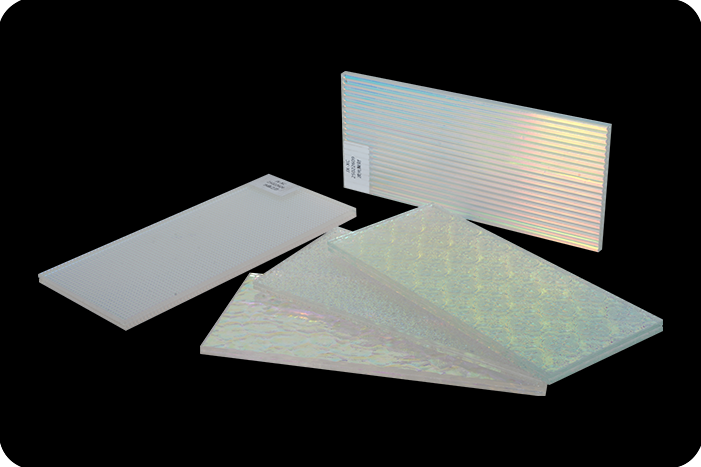
The plies on either side of the interlayer can be standard clear, low iron, body tinted, patterned or frosted glass. This choice changes the final color more than most buyers expect. Standard clear glass carries a faint green cast that grows with thickness and pushes pale colors toward green. White, pale pink, pale blue and light grey look cleaner on low iron glass, which is why designers working with delicate colors often pair them with an ultra white laminated glass substrate for truer color rendering. Deep reds, blacks and strong blues hide the difference and perform well on standard clear glass at a lower cost.
Lamination process and color consistency
Glass plies are cleaned, assembled with the colored films in a controlled room, de-aired with heated nip rollers and bonded in an autoclave under heat and pressure, commonly at around 130 to 140 degrees Celsius and 12 to 13 bar. Color consistency depends on the film batch, the film width and the way seams are handled. Large panels can exceed the roll width of a given film, so the supplier must either join film sections or use a wider roll. Ask how seams are controlled, and require that all panels for one elevation or one partition run come from the same film batch, because small batch differences become visible when panels stand side by side.
Permanent Color
The color layer is sealed between two glass plies, so it resists scratching, peeling and cleaning chemicals for the life of the panel.
Light and Privacy Control
Translucent films diffuse color and keep daylight, while opaque films create full privacy or a solid colored surface.
Safety Glass Performance
If a ply breaks, the interlayer holds fragments in place, which reduces injury risk and keeps the opening protected.
UV Protection and Acoustic Options
About 99 percent of UV is filtered, and acoustic grade films can be combined with color to reduce noise in offices and hotels.
Colorful Laminated Glass vs Back Painted, Ceramic Printed and Tinted Glass: Data Comparison
Buyers usually compare colored laminated glass with three alternatives. The table summarizes how they differ on the properties that decide durability, safety and cost. Statements describe typical products and should be confirmed with the supplier for any specific build.
Parameter
Colored Interlayer Laminated
Back Painted Glass
Ceramic Printed Glass
Body Tinted Glass
Color source
Pigmented or dyed film between plies
Paint coat on rear surface
Ceramic ink fired into surface
Metal oxides in the glass body
Color range
Wide, custom blends by stacking films
Almost unlimited
Wide, with patterns
Limited to grey, bronze, green, blue
Light control
Transparent to opaque
Usually opaque
Set by ink coverage
Fixed by thickness
Safety behavior
Holds fragments after breakage
Needs backing film or lamination
Tempered, breaks into small pieces
Depends on treatment and build
Scratch exposure of color
Protected inside the laminate
Exposed paint layer
Durable fired surface
Through the body
Exterior use
Suitable with stable films and sealed edges
Mainly interior
Suitable
Suitable
Cost position
Medium
Low to medium
Medium to high
Low
Best suited to
Partitions, balustrades, safety glazing with color
Splashbacks, wall panels
Façades, patterned glazing
Solar and glare control
Qualitative comparison of typical product types. Cost position is relative and varies by market, size and specification.
Reading the comparison correctly
The row that matters most is where the color sits. In a laminated panel the color layer is sealed between two sheets of glass. It cannot be scratched, it does not peel, and cleaning products reach only the glass surface. Back painted glass keeps its color on an exposed rear face, which suits a kitchen splashback but not a partition that people lean on and clean every day. Ceramic printing is extremely durable and allows patterns, but it requires tempering and does not give the smooth, continuous transparent color of a film.
Safety behavior is the second differentiator. Colored laminated glass holds fragments in place when a ply cracks. Painted glass needs a safety backing film or lamination to reach the same behavior, and body tinted glass is only as safe as its heat treatment and build.
Cost position needs care. A colored laminated panel usually costs more than a plain tinted pane, but it replaces two products: the safety glass and the coloring step. When a project would otherwise need laminated glass plus film, paint or a printed layer, the colored interlayer option often costs about the same, with fewer suppliers and fewer points of failure.
Colored Safety Glass Applications: Where Demand Comes From
Demand for colored laminated glass concentrates in places where color, privacy and safety are needed in the same panel. The chart gives an indicative application mix for typical project enquiries. It is a directional estimate for planning, not an audited market statistic, and the real balance changes by region and by year.
Indicative
application
mix
application
mix
Interior partitions, doors and wall panels
28%
Façades, spandrels and decorative cladding
22%
Balustrades, stairs and railings
16%
Retail fittings and display
14%
Furniture, shelving and appliances
12%
Canopies, skylights, elevators and signage
8%
Colored laminated glass for partitions and doors
Interior partitions lead the mix because offices, clinics, schools and hotels need privacy, brand color and safety in one component. Translucent films blur the view while passing daylight, which keeps corridors bright. Acoustic interlayers can be combined with color to reduce sound transmission between rooms. In doors and side panels, the safety glass classification matters as much as the color, so the build should be confirmed against the local impact standard.
Façades, spandrels and decorative cladding
On the exterior, colored laminated glass is used for entrance canopies, spandrel panels, shopfront accents and brand colored cladding. These applications put extra demands on the film. Ultraviolet stability, heat absorption and edge sealing all matter, and darker colors absorb more solar energy, so heat strengthened or tempered plies are often needed to control thermal stress. Ask the supplier which colors it recommends for exterior exposure and which it keeps for interiors.
Balustrades, retail fittings and furniture
Balustrades use tinted barrier glass in hotels, atria and residential stairs, where designers want color without losing the sense of openness. Structural balustrades must meet load and post breakage requirements, so confirm that the chosen colored film is approved for that duty or choose a stiffer interlayer combination. Retail fittings use brand color shelves, dividers and showcases, and furniture makers use colored laminated glass for tabletops, cabinet doors and shelving, where the smooth, scratch protected surface is a selling point.
Hidden Metrics in Custom Color Laminated Glass That Affect Real Projects
Datasheets list thickness, weight and color name. Experienced buyers also look at the figures below, because they decide whether the finished installation matches the rendering.
Typical Visible Light Transmittance of 6+6 mm Builds by Interlayer Color (%)
84
62
52
42
38
25
Clear film
Light blue
Green
Bronze
Milky white
Deep red
Indicative values on clear glass. Actual figures vary by film supplier, pigment load and thickness, so confirm with the data sheet of the film chosen.
Light transmittance varies widely between colors
The chart shows why a color name alone is a poor specification. A pale blue and a deep red can both be called translucent, yet one passes more than half of visible light and the other about a quarter. Specify a target transmittance and a color reference together, and approve both against a physical sample. For privacy partitions, the transmittance also determines how much of a person's outline remains visible from the other side.
Transmitted color and reflected color are not the same
A colored laminate looks different depending on which side the light comes from. Seen from outside a building in daylight, the reflected color can be paler than the transmitted color seen from inside. Against a dark interior, a translucent film looks deeper and more saturated. Approve samples in the lighting that the finished room will actually have, and view them against the same background, because a swatch held up at a desk can mislead.
Base glass and edge appearance
The glass beneath the film shifts the final color, and the exposed edge shows both the glass and the film. On a polished edge, a colored interlayer appears as a thin colored line, and standard glass adds a green tint on thick builds. Some designers love that line as a detail. Others hide it inside a frame or choose an interlayer and glass combination that keeps it subtle. Decide this early, because it cannot be changed after lamination.
Lightfastness, heat absorption and thermal stress
Dyes and pigments differ in how well they resist ultraviolet exposure. Interior panels away from direct sun rarely give trouble. Exterior and sun exposed panels need films with proven weathering performance, and the glass plies shield the film from part of the UV. Ask for durability data under EN ISO 12543-4 or an equivalent method, and for the manufacturer's recommendation on exterior use of each color. Dark colors also absorb more solar energy, which raises glass temperature and thermal stress, so heat strengthened or tempered plies are often the safer choice.
Batch consistency and color tolerance
Large projects fail visually when panels delivered in different months do not match. Ask the supplier to state an acceptable color difference, usually expressed as Delta E, and to reserve enough film from one batch for the whole order plus a margin for replacements. Keep a signed reference sample on file so that later orders are checked against the same standard.
How to Choose Colorful Laminated Glass: Step by Step Selection Guide and ROI
A reliable specification follows a fixed order. Most disputes on site come from a skipped sample approval or from a color decision made after the structural build was fixed.
1
Define function, location and safety class
Record whether the panel is interior or exterior, the impact class, fall height, wind and live loads, and any acoustic or fire targets. These fix the minimum glass thickness and interlayer before color enters the discussion.
2
Set the color and light brief
State the color reference, target visible light transmittance and the degree of privacy needed. Decide whether a stacked custom color is acceptable or whether a standard film color will do.
3
Pick the base glass and heat treatment
Use low iron glass for pale and white colors, standard clear glass for deep colors, and heat strengthened or tempered plies where thermal stress or impact loads call for them.
4
Approve a physical sample in real lighting
Request a full thickness sample with the intended edge finish. View it against the real background in daylight and artificial light, and sign off color, transmittance and edge appearance in writing.
5
Lock quantities, batches, packing and installation
Reserve film for the whole order, confirm panel sizes against film width, agree packing and edge protection, and align the glazing system and sealants with the interlayer's compatibility requirements.
A simple ROI model for colored interlayer glass
The comparison is easiest when color and safety are priced together. Take 150 square meters of partition glazing. Suppose clear laminated glass has an index of 100 per square meter, and the decorative step, whether film, paint or print plus labor, adds 30, for a total of 130. A colored laminated panel at an index of 125 saves 5 units per square meter, or 750 units across the project. The figures are illustrative, but the logic holds: color and safety are bought once, from one supplier, in one panel.
The larger gains appear later. Painted or filmed surfaces need replacement when they scratch or peel, and every replacement carries glass, labor and downtime. A sealed colored interlayer avoids that cycle. For distributors, color laminates also carry a better margin than plain safety glass and attract design led buyers. For fabricators, the main return is yield and reputation, since consistent color across a large order is a visible measure of process control.
Maintenance, Handling and Compliance for Colored Laminated Glass
Standards and tests to reference
The applicable standard depends on the destination market. For Europe, the usual references are EN 14449 and the EN ISO 12543 series for laminated glass, including part 4 for durability tests, EN 12600 for impact classification and EN 16612 for load resistance calculation. In North America, buyers commonly cite ANSI Z97.1 and 16 CFR 1201 for safety glazing, ASTM C1172 for laminated architectural flat glass and ASTM E1300 for load resistance. Australia and New Zealand follow AS/NZS 2208, and Chinese projects follow the GB 15763 series. Ask which of these the supplier's test reports cover and match them to the local authority's requirements.
A test result applies to the configuration that was tested. A class achieved on a small specimen with one interlayer does not automatically apply to a larger panel, a different support condition or a different film color, so compare the tested build with the project build and ask for confirmation when they differ.
Edge protection and sealant compatibility
The edge is the vulnerable part of any laminated panel. Standing water, constant humidity and incompatible sealants can attack the interlayer at the perimeter, causing white fogging, color change or delamination. Use sealants and setting materials confirmed as compatible with the specific interlayer, keep edges drained and ventilated in wet areas, and avoid leaving panels on damp packaging or in standing water on site.
Fabrication limits and late changes
All cutting, drilling, notching and edge work must be completed before lamination, and tempering must happen before lamination as well. Colored films make late corrections impossible, so confirm dimensions, hole positions and hardware details against shop drawings before production starts.
Storage, transport and cleaning
Store panels vertically on padded racks in a dry, ventilated area with separators between sheets and protection on every corner. Keep cases secured and shielded from rain during transport. For cleaning, use a soft cloth and a mild, non abrasive glass cleaner, and keep solvents away from the edges. Remove labels and tape residue promptly, and wipe splashes of sealant before they cure on the surface.
Documentation to request with every order
A properly documented shipment includes the specification sheet with glass type, thickness, film color and batch, test reports and certificates for the relevant standards, heat soak records where required, color tolerance and visual quality criteria, and written handling and installation guidance. These records protect both the buyer and the installer if a question arises years after handover.
Colorful Laminated Glass FAQ
+ What is colorful laminated glass and how is it made?
It is laminated safety glass in which two or more glass plies are bonded by one or more colored interlayers, most often PVB. The plies and films are cleaned, assembled in a controlled room, pressed to remove air and bonded in an autoclave under heat and pressure. The result is a single optically clear panel with the color sealed inside.
+ Is colored laminated glass classified as safety glass?
Yes, when the build meets the relevant standard. The safety behavior comes from the glass thickness, the heat treatment and the interlayer, not from the color. The panel holds fragments in place after breakage, but the impact class and any load rating must be confirmed for the exact configuration and support conditions.
+ Can colors be customized to match a brand or design reference?
Close matches are often possible by choosing from the available film palette or by stacking films of different colors. An exact match to a printed reference is difficult, because the color seen through glass differs from the color seen on a painted surface. The reliable method is to approve a physical sample made with the intended glass and film before production.
+ Can colorful laminated glass be used outdoors?
It can be used in canopies, façade panels and shopfronts when the film has suitable weathering performance and the edges are sealed correctly. Darker colors absorb more solar energy, so heat strengthened or tempered plies are often needed. Ask the supplier which colors it recommends for exterior use and request durability data for the selected film.
+ How does the color affect light transmission and privacy?
Pale translucent films may pass around 60 percent of visible light, while deep colors and milky white films pass much less and opaque films pass almost none. Privacy depends on transmittance and on the lighting on each side of the panel. Specify the target transmittance in the order and check the sample from both sides.
+ Will the color fade over time?
Interior installations away from strong direct sun typically show very little change. Fading risk grows with intense UV exposure and with dyes of lower stability. The glass plies filter part of the ultraviolet radiation before it reaches the film. Request lightfastness or durability data for the specific color and avoid unverified colors in sun exposed locations.
+ What thicknesses and panel sizes are available?
Builds usually start around 6.38 mm and extend to much thicker structural laminates with multiple plies and films. Maximum panel size depends on the film roll width, the glass size available and the equipment of the fabricator. Send your required dimensions and the supplier can confirm whether a single panel or a joined film is needed.
+ What should I include in a request for quotation?
Include the application and location, panel sizes and quantities, preferred thickness build, interlayer color and target light transmittance, base glass type, heat treatment, edge finish, target standards, destination port and packing method. Drawings and a delivery schedule speed up the answer, and a sample request alongside the quotation lets color be approved early.
Summary: Getting the Most From Colorful Laminated Glass
Colorful laminated glass combines three things that are usually bought separately: safety performance, light and privacy control, and a protected color layer. Its value is highest in partitions, façade accents, balustrades, retail fittings and furniture, where color must survive daily contact, and lowest where a simple tint or a single painted splashback would do.
The risks are manageable when they are known. Specify transmittance as well as color, match the base glass to the shade, approve a full thickness sample in real light, reserve film from one batch, protect the edges and match test reports to the destination market's standards. These steps cost little and prevent most disputes after installation.
Request Colorful Laminated Glass Specifications and Samples
Send your drawings, color references and target standards to the Hangzhou SCSG Glass Technology Co., Ltd. team to receive a build recommendation, technical data and a physical sample for approval.
View the Colorful Laminated Glass Product Page