

+86-571-63780050
+86-18918137728
19941084290
Content
- 1 How the Wire Mesh Absorbs and Redistributes Blast Energy
- 2 Fire Rating and Explosion Protection Often Overlap in the Same Product
- 3 Selecting the Right Configuration for the Application
- 4 Common Installation Points Where Fragment Retention Matters Most
- 5 Manufacturing Consistency Behind a Reliable Wired Glass Order
Explosion Proof Wired Glass Holds Its Shape After the Glass Breaks
Explosion proof wired glass is a laminated or wired safety glass with an embedded metal wire mesh that keeps broken glass fragments locked together rather than scattering after a blast, impact, or fire exposure. The wire grid does not make the glass harder to break — in fact, wired glass typically has lower impact resistance than plain tempered glass of the same thickness — but it fundamentally changes what happens after breakage: instead of shattering into loose shards, the pane stays as a single cracked sheet held in place by the mesh, which is the property that actually matters in a blast, fire, or forced-entry scenario.
This distinction is why wired glass shows up in building codes as a specific category rather than being grouped with general "safety glass." A standard tempered pane is rated to break into small, relatively blunt pieces, but it still fully disintegrates and leaves an open opening. Wired glass, by contrast, can remain in its frame even after the glass matrix has fractured across most of its surface, which is the core reason it is specified for openings where a temporary barrier after breakage matters more than avoiding breakage altogether.
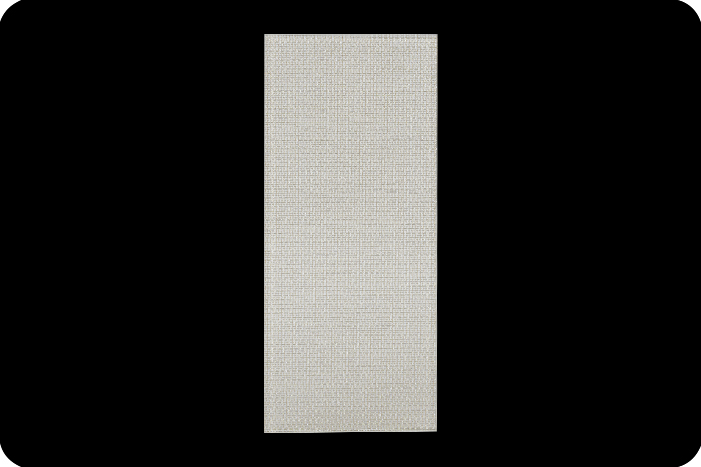
How the Wire Mesh Absorbs and Redistributes Blast Energy
When a blast wave or sudden impact hits a wired glass pane, the glass itself fractures almost immediately into a dense network of small cracks, but the embedded wire — usually a welded or woven steel mesh with a 12mm to 13mm square or diamond aperture — continues carrying tensile load across the pane. The wire does not prevent the glass from cracking; it prevents the cracked pieces from separating and becoming secondary projectiles, which is often the more dangerous outcome in an explosion or high-impact event than the initial breakage itself.
Wire Gauge and Mesh Density Affect Fragment Retention
A finer mesh with thinner wire gauge holds smaller glass fragments more tightly but contributes less structural tensile strength across the pane, while a coarser mesh with heavier wire gauge resists a larger overall force before the wire itself deforms or tears, at the cost of allowing slightly larger glass fragments to work loose at the mesh openings. Matching mesh density to the expected threat level — routine impact versus a genuine blast-pressure event — is a specification decision, not a one-size-fits-all default.
Fire Rating and Explosion Protection Often Overlap in the Same Product
Explosion proof wired glass frequently carries a fire rating alongside its impact classification, because the same wire mesh that holds fragments together after an impact also holds the cracked glass in place during a fire, preventing an opening from forming that would otherwise let flame and smoke pass through prematurely. Fire-rated wired glass is commonly tested and classified in 20-minute, 45-minute, 60-minute, and 90-minute fire-resistance increments, depending on the wall or door assembly it is installed into.
| Factor | Typical Range | Effect on Performance |
|---|---|---|
| Glass thickness | 6mm–13mm | Higher thickness increases blast pressure resistance before initial cracking |
| Wire mesh aperture | 10mm–13mm | Smaller aperture retains finer fragments more effectively |
| Fire resistance rating | 20–90 minutes | Determines allowable opening area and installation location under fire code |
| Lamination | Single or laminated wired-PVB assembly | Laminated versions add secondary fragment retention beyond the wire mesh alone |
Selecting the Right Configuration for the Application
Not every project that specifies "explosion proof wired glass" needs the same configuration, and over-specifying thickness or mesh density adds unnecessary weight and cost without a corresponding safety benefit. A few practical questions help narrow the specification before ordering:
- Is the primary risk explosive blast pressure, forced impact, or fire containment — each shifts the priority between glass thickness, wire gauge, and fire rating
- What is the maximum unsupported pane size required by the frame design, since larger panes generally need thicker glass or denser mesh to meet the same rating
- Does the installation require a fire rating in addition to impact resistance, which narrows the product to tested and certified fire-rated wired assemblies
- Will the glass be exposed to direct weather, which affects whether a laminated or coated wired glass assembly is more appropriate than standard wired glass alone
Common Installation Points Where Fragment Retention Matters Most
Explosion proof wired glass is typically specified for openings where an uncontrolled breakage event would create an immediate secondary hazard — not for general glazing where standard tempered or laminated glass already meets the risk profile. Common installation points include:
- Fire door vision panels and stairwell glazing, where the glass must stay in place during a fire event to maintain the compartment barrier
- Industrial facility windows near equipment with pressure-release risk, such as boiler rooms and chemical processing areas
- Security partitions and cash-handling enclosures, where fragment retention after a forced-impact attempt buys time before full penetration
- Museum and display case glazing, where fragment containment protects both viewers and the protected object behind the glass in the event of an impact
Manufacturing Consistency Behind a Reliable Wired Glass Order
Wire mesh embedding is a process step, not a surface treatment — the wire has to sit at a consistent depth within the glass during the rolling or lamination stage, or the finished pane ends up with weak points where fragment retention fails first under load. Consistency across a production run matters as much as the on-paper specification, particularly for larger orders where every pane is expected to perform identically.
Hangzhou SCSG Glass Technology Co., Ltd. (SCSG-GLASS) manufactures and supplies explosion proof wired glass with process control developed from its broader work in protective and display glazing, including museum-grade showcase glass produced for institutions that require both optical clarity and reliable fragment containment. As an Explosion Proof Wired Glass Manufacturer and Customized Explosion Proof Wired Glass Supplier in China, SCSG-GLASS supports project-specific configuration of thickness, mesh pattern, and fire rating rather than offering a single fixed specification, drawing on production experience built in part through its strategic cooperation with AGC of Japan on advanced glass processing technology.
